
The Pressure Institute
Human Adaptation Intelligence: What Performance Measures May Miss
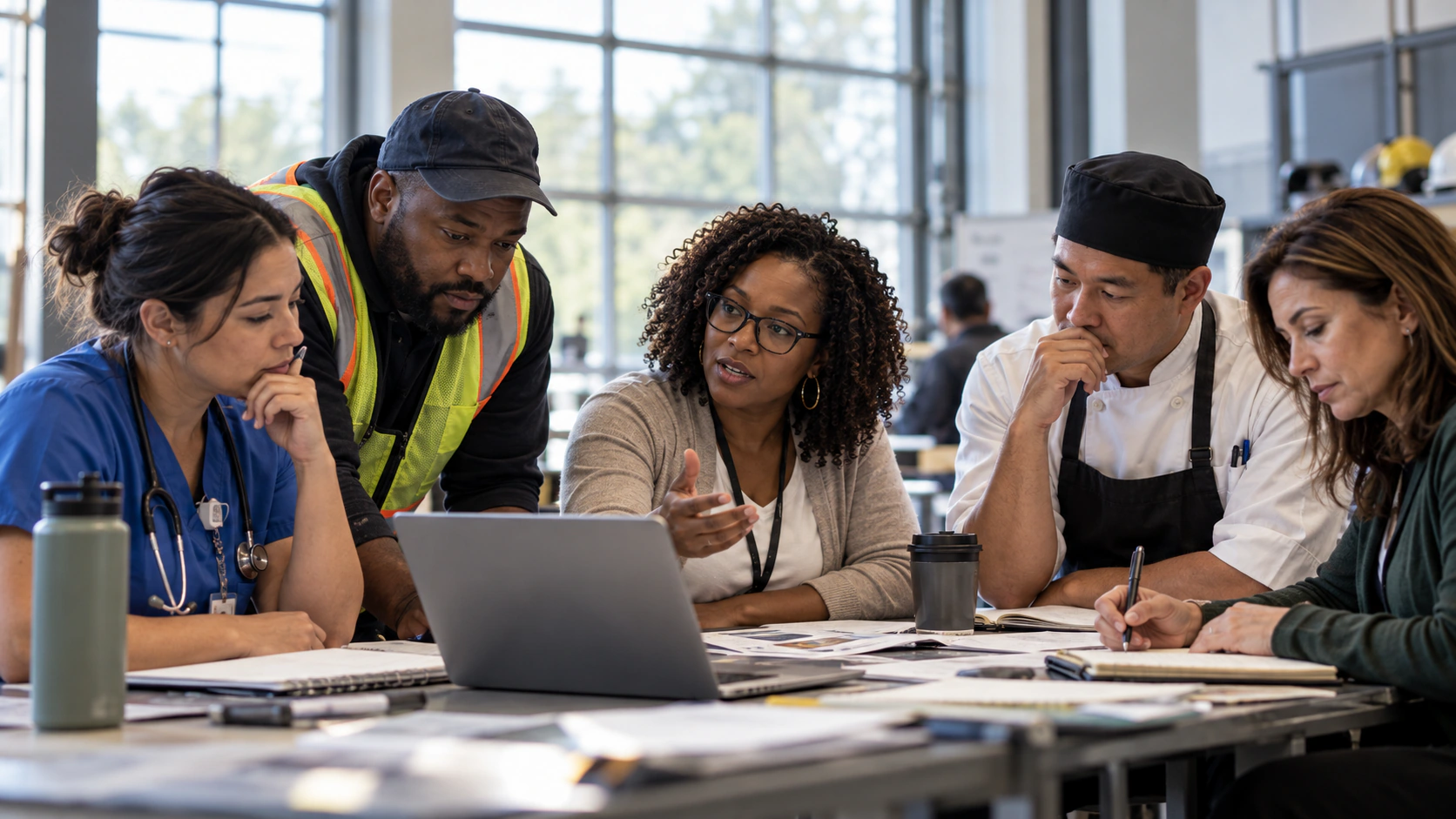
What happens between the demands people face and the outcomes organizations measure?
Organizations can measure whether employees are meeting expectations without fully understanding how those employees are adapting to meet them. A person may maintain strong performance while becoming more hesitant to make decisions, asking fewer questions, or withdrawing from conversations that previously helped them navigate their work.
From an organizational perspective, the results may remain unchanged. Yet the way someone responds to the conditions surrounding those results may be changing.
The Pressure Institute uses Human Adaptation Intelligence to examine that difference, particularly in workplaces where growing demands, changing expectations, and organizational transitions place new pressure on people.
What Is Human Adaptation Intelligence?
Human Adaptation Intelligence is a developing area of inquiry concerned with how people respond and adapt to changing demands, expectations, environments, and conditions.
It examines the relationship between the circumstances people encounter, the responses that become observable, and the outcomes organizations eventually measure.
Psychology, organizational behavior, and related fields have long investigated human adaptation. The Pressure Institute is developing Human Adaptation Intelligence as a distinct way of organizing and applying these questions in workplace and workforce development settings, particularly where pressure influences how people respond.
This work does not assume that changes in behavior indicate distress or declining performance. Adaptation can be constructive, neutral, or costly depending on the circumstances and the individual's experience.
The central question is not simply whether someone is meeting expectations. It is what may be changing in how that person responds while those expectations are being met.
Why Similar Performance Can Conceal Different Responses
Consider two employees working under the same operational demands. Both complete assignments, meet deadlines, and maintain satisfactory attendance.
From a performance dashboard, their results may appear nearly identical.
Yet one continues asking questions, adjusting decisions, and participating in conversations about the work. The other becomes more cautious, relies increasingly on familiar routines, and contributes less frequently during team discussions.
Neither response automatically establishes a problem. The second employee may be demonstrating greater independence, responding to previous experiences, or navigating circumstances that are not visible to the organization.
What the comparison illustrates is that similar outcomes do not necessarily mean people are adapting in similar ways.
An organization may know that performance has been maintained without knowing whether the responses supporting that performance have changed.
Human Adaptation Intelligence examines that space between observable outcomes and the human responses occurring within the conditions of work.
How People Adapt to Workplace Pressure and Change
Workplace adaptation is not limited to major organizational disruptions. It can occur during routine changes in expectations, responsibilities, leadership, schedules, and available support.
During onboarding, a new employee may complete assigned responsibilities while becoming less comfortable asking for assistance. A supervisor might interpret the change as growing independence without knowing whether the employee is experiencing increased confidence, uncertainty, or something else entirely.
During organizational change, employees may follow new procedures while participating less in conversations about how those procedures affect their responsibilities.
In workforce development programs, a participant may continue attending training while changing how they approach unfamiliar tasks, receive feedback, or engage with instructors.
Each situation presents an opportunity to investigate rather than assume.
A change in communication, decision-making, or participation may reflect several circumstances. Human Adaptation Intelligence does not determine an explanation from the behavior alone. It encourages examination of the conditions surrounding the response.
What Organizations Can Begin to Examine
Organizations already collect information about attendance, productivity, performance, retention, and completion. These measures provide important evidence about outcomes.
Human Adaptation Intelligence adds another set of questions for organizational consideration.
- Are employees responding differently as expectations and responsibilities change?
- Are participation and communication changing even when performance remains consistent?
- What conditions may be influencing how people approach decisions, feedback, or unfamiliar tasks?
- Are organizational conclusions based on what has actually been observed, or on assumptions about what those observations mean?
These questions are relevant to workforce development organizations, employers, training providers, and leadership teams navigating changing demands.
They do not replace existing workforce metrics, professional judgment, or conversations with the people involved. They help identify where additional inquiry may be useful.
Human Adaptation Intelligence and The Pressure Institute
The Pressure Institute studies human responses under pressure and develops educational and assessment-based applications related to that work.
Human Adaptation Intelligence provides a broader intellectual territory for examining the relationship between changing conditions, human adaptation, and observable outcomes.
Pressure Literacy addresses the educational dimension, helping people recognize and understand how pressure may influence communication, decisions, participation, and behavior.
The Pressure System Index is a proprietary assessment system developed by the Institute to examine pressure-related response patterns within defined applications. Its internal scoring, interpretation methods, and system architecture are not part of the public explanation of Human Adaptation Intelligence.
These areas of work are connected, but they serve different purposes. Human Adaptation Intelligence can be understood independently of any individual assessment or product.
Organizations interested in how the Institute approaches this work can explore what The Pressure Institute does.
Looking Beyond the Outcome
Organizations should continue measuring performance, attendance, productivity, completion, and retention. These outcomes remain essential.
But improving how organizations measure results does not automatically improve their understanding of the people producing those results.
Two employees can achieve similar outcomes while responding very differently to the conditions surrounding their work. A training participant can maintain attendance while changing how they engage with learning. A manager can meet expectations while becoming less adaptable as responsibilities change.
Human Adaptation Intelligence gives The Pressure Institute a way to investigate these differences without assuming that every change signals a problem.
What might an organization's performance measures be missing about how people are adapting to the conditions in which they work?
The Pressure Institute works with organizations interested in examining that question within their workforce, leadership, and development environments.
Contact The Pressure Institute to discuss your organization's questions.